
How the crisis center connects to the broader support system behind the interaction.
Crisis centers often serve as the front door to the broader crisis care continuum. This reference architecture illustrates how the interaction layer connects to field response, stabilization, post-crisis support, operational systems, governance structures, and data infrastructure.
The visual is intended to show why continuity depends on more than the front-door interaction. A reliable crisis system requires coordination across services, partners, workflows, responsibilities, and data.
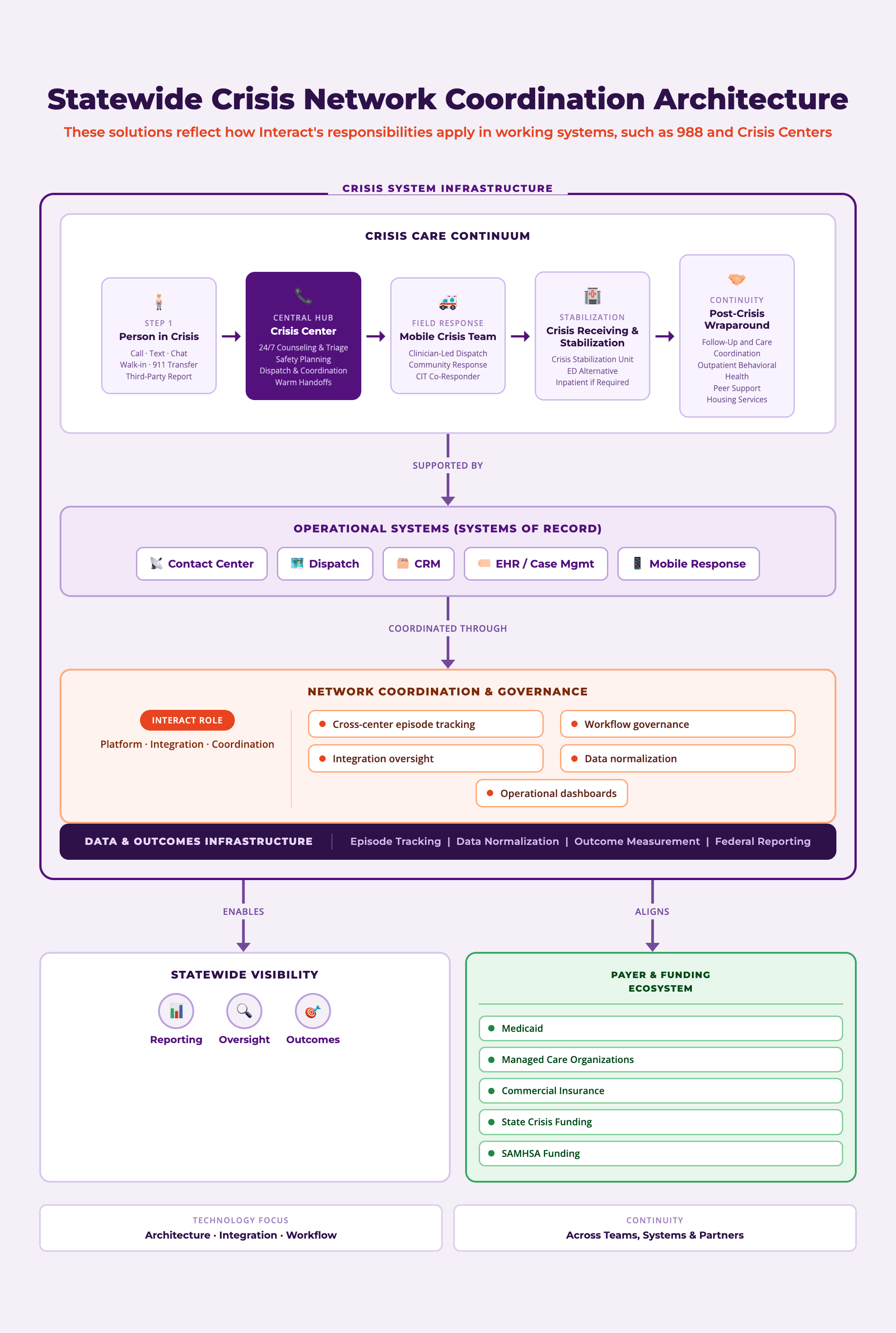
The diagram shows a statewide crisis network coordination architecture. It explains how crisis care moves through a statewide system, how operational systems support that care, how network coordination and governance are managed, and how data, visibility, and funding are connected.
The layout flows from top to bottom.
At the top is a large section labeled “Crisis System Infrastructure.” Inside it is a “Crisis Care Continuum” showing five stages from left to right.
The first stage is “Person in Crisis.” Entry points include phone call, text, chat, walk-in, 911 transfer, and third-party report.
The second stage is “Central Hub” or “Crisis Center.” This includes 24/7 counseling and triage, safety planning, dispatch and coordination, and warm handoffs.
The third stage is “Field Response” or “Mobile Crisis Team.” This includes clinician-led dispatch, community response, and crisis intervention team co-responders.
The fourth stage is “Stabilization” or “Crisis Receiving and Stabilization.” This includes crisis stabilization units, emergency department alternatives, and inpatient care if required.
The fifth stage is “Continuity” or “Post-Crisis Wraparound.” This includes follow-up and care coordination, outpatient behavioral health, peer support, and housing services.
A downward arrow labeled “Supported By” connects the continuum to a section labeled “Operational Systems” or “Systems of Record.”
This section contains five supporting systems: Contact Center, Dispatch, CRM, EHR or Case Management, and Mobile Response.
Another downward arrow labeled “Coordinated Through” leads to a section called “Network Coordination and Governance.”
On the left side of this section is an orange label reading “Interact Role” with the words “Platform, Integration, Coordination.”
On the right side are five governance and coordination functions shown in separate boxes: Cross-center episode tracking, Workflow governance, Integration oversight, Data normalization, and Operational dashboards.
Beneath this is a dark bar labeled “Data and Outcomes Infrastructure.” It includes Episode Tracking, Data Normalization, Outcome Measurement, and Federal Reporting.
From this data layer, two arrows point downward to two side-by-side sections.
On the left is “Statewide Visibility,” labeled “Enables.” This includes Reporting, Oversight, and Outcomes.
On the right is “Payer and Funding Ecosystem,” labeled “Aligns.” This includes Medicaid, Managed Care Organizations, Commercial Insurance, State Crisis Funding, and SAMHSA Funding.
At the very bottom are two foundational areas.
On the left is “Technology Focus,” which includes Architecture, Integration, and Workflow.
On the right is “Continuity,” described as continuity across teams, systems, and partners.
Overall, the diagram shows that crisis care is supported by operational systems, coordinated through governance and data infrastructure, and connected to statewide visibility and payer alignment.
Continuity across the crisis care continuum depends on the systems, governance structures, and data infrastructure that allow services to work as one.